



2,000+ satisfied customers


A project description beats asking for a general clean. Say what kind of work was done, which rooms it touched, and what the surfaces look like. One remodeled bathroom and a whole building are very different conversations about access and what's left to do.
For a home, say if anyone is still living there and which rooms are in use. For a commercial property, name who approves the estimate and who arranges access. Each project gets its own address; the scope at one site doesn't carry to the next.
Mention if contractors still have to come back. Painting, deliveries, or finish work can move the date and change the condition you described for the estimate. Confirm which cleaning tasks Naples Glass can take on for your project before you arrange the handover.
Make a room-by-room list of what you want looked at. Name the surface and what's on it. Dust on a counter, packing foam on the floor, and residue on glass are three different jobs.
Use details like these to explain the request:
This list organizes the inquiry; it isn't a list of included services. Ask which items the company accepts, and keep those with the estimate. Point out surfaces to leave alone and pass along any care instructions from the installer before agreeing on the work.
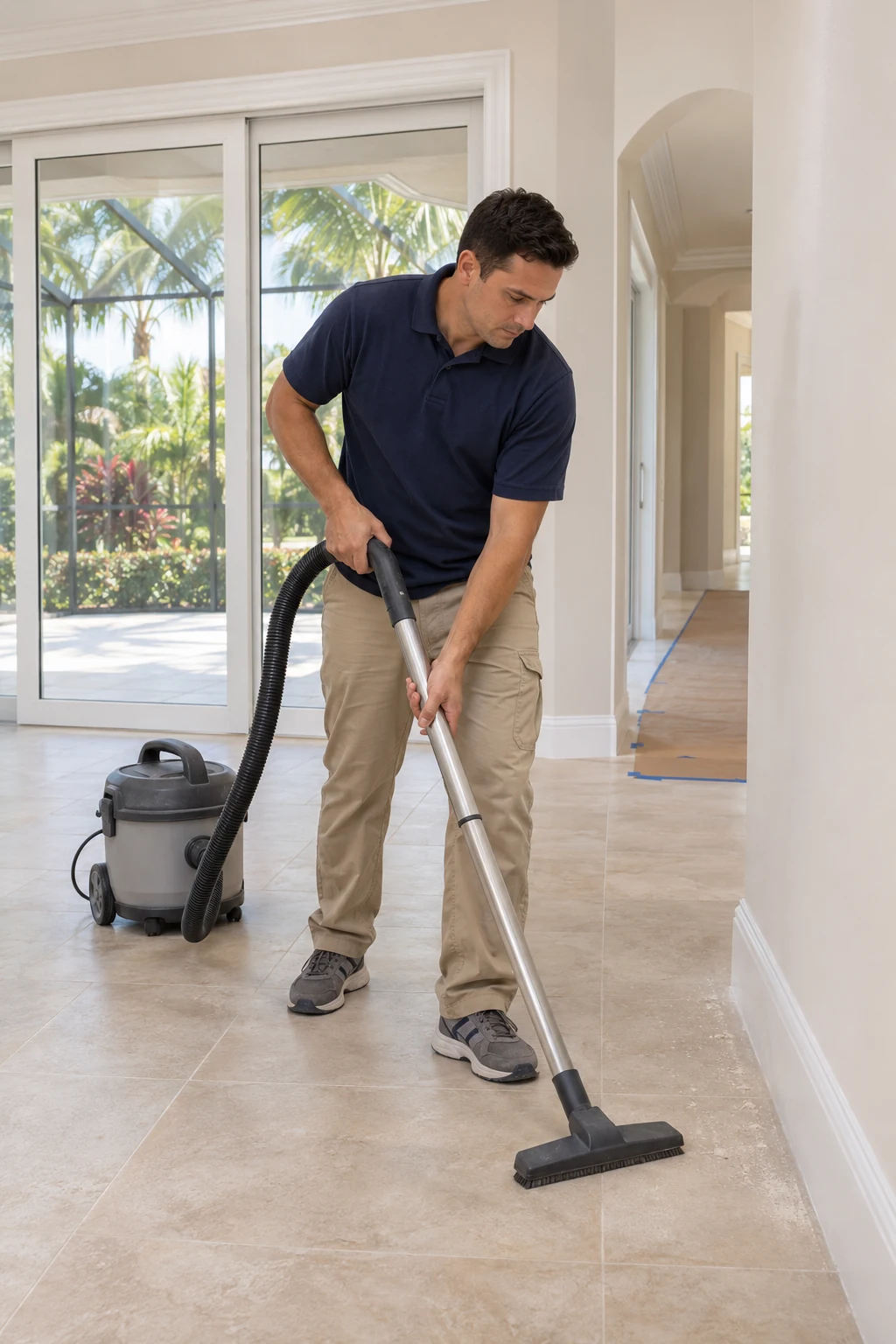


Naples Glass Cleaning offers residential window cleaning and commercial window cleaning. Glass coming out of a construction project still gets its own review. Describe the dust, stickers, paint, or adhesive when you ask about the project, and confirm what the company can take on.
List interior panes, exterior panes, sliding doors, frames, and tracks separately. Mention upper floors, tight access, coatings, or existing damage, and send the window or installer care instructions if you have them. A standard window-cleaning request doesn't say which construction residues can be treated or what's possible on damaged glass.
Keep the window scope and the room-cleaning scope separate in the estimate. If glass is all you need, say so up front. If other surfaces need attention too, list them on their own so the accepted work is clear before anything is scheduled.


Before you ask for a visit, take stock of the materials, debris, and residue the contractor left. Ask who handles those items and what has to leave the property first. A cleaning inquiry doesn't cover hauling, a dumpster, or a contractor's unfinished work.
Paint, adhesive, grout haze, and similar residues need their own scope review. Describe the material and the surface under it. Not every leftover mark is an ordinary cleaning item, and a cleaning appointment doesn't include repairs or finish correction.
Pass along anything the contractor flagged as needing a specialist. Hazardous materials, remediation, duct cleaning, and restoration sit outside the assumed scope. If one of those is required, settle who's responsible before arranging the cleaning. The accepted estimate has to name the work the company agrees to do.
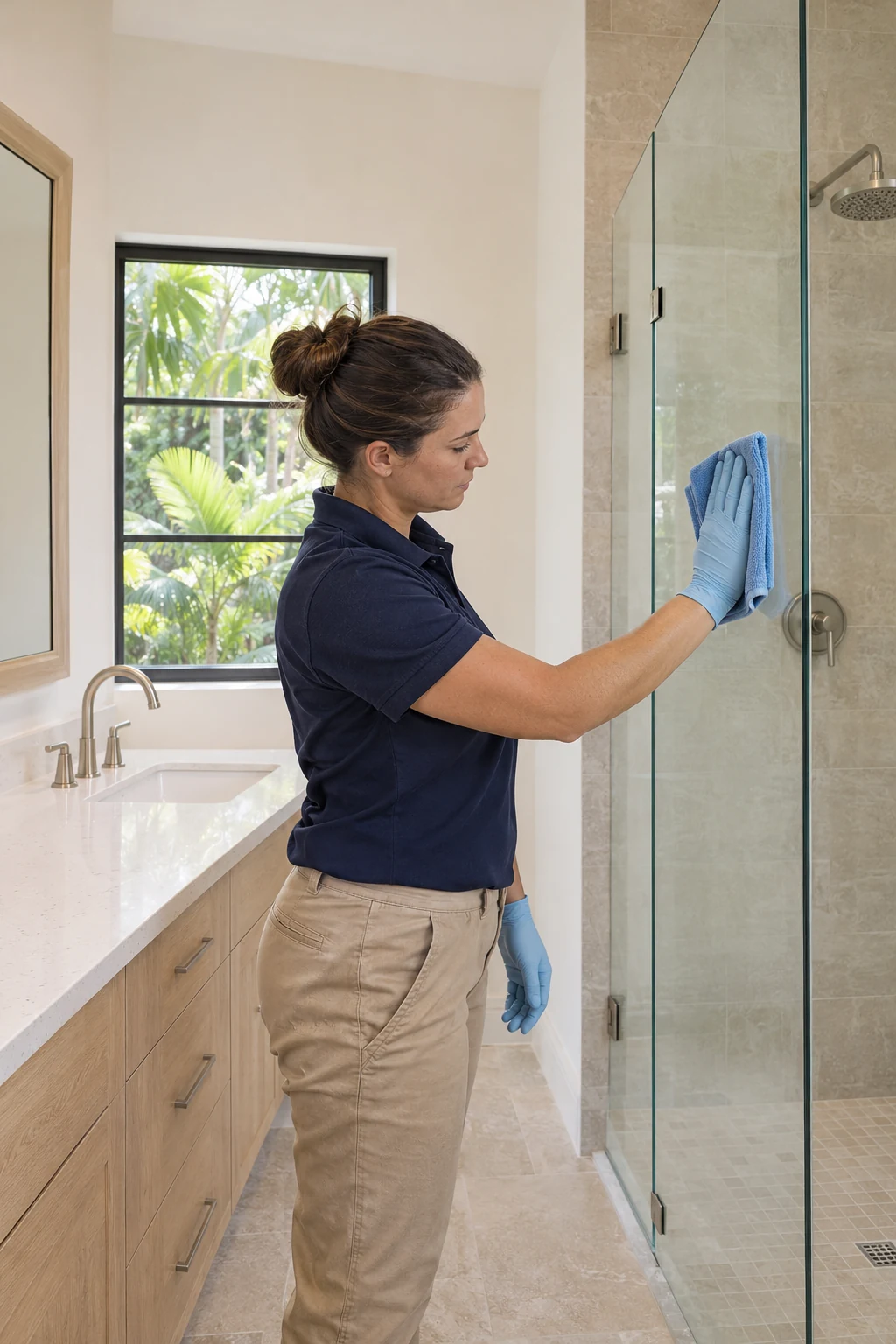
Give the expected completion date and the date you hope to use the space, plus any closing, walkthrough, or tenant handover in between. Share those dates when you ask about availability. A deadline on your end doesn't confirm an appointment.
Name the person who can let the crew in and answer questions about the agreed work. In a managed building, cover service entrances, parking, elevator reservations, and the hours work is allowed. Raise any property requirements before the estimate is accepted.
If trades come back after the cleaning date, talk through that order before booking. A later touch-up visit is its own agreement. When the project schedule changes, update the access and condition details with it, and confirm the property is ready before the visit.
This page is about the mess building or renovation work leaves behind. Describe construction dust and residue directly rather than booking it under a general housekeeping description. A routine cleaning schedule doesn't decide which project tasks are accepted.
For ongoing care after the project, see residential maid service or commercial janitorial services. Keep those recurring needs apart from the handover work, and agree on each service's scope and availability before setting a schedule.
Exterior work gets its own description too. The residential pressure washing and commercial pressure washing pages explain those services. For a construction-related request, name the surface and what's left on it so the company can check whether it's a fit. A general service page doesn't confirm treatment of a specific construction residue.


